01
GET TO KNOW SPIDERS
- How to identify it
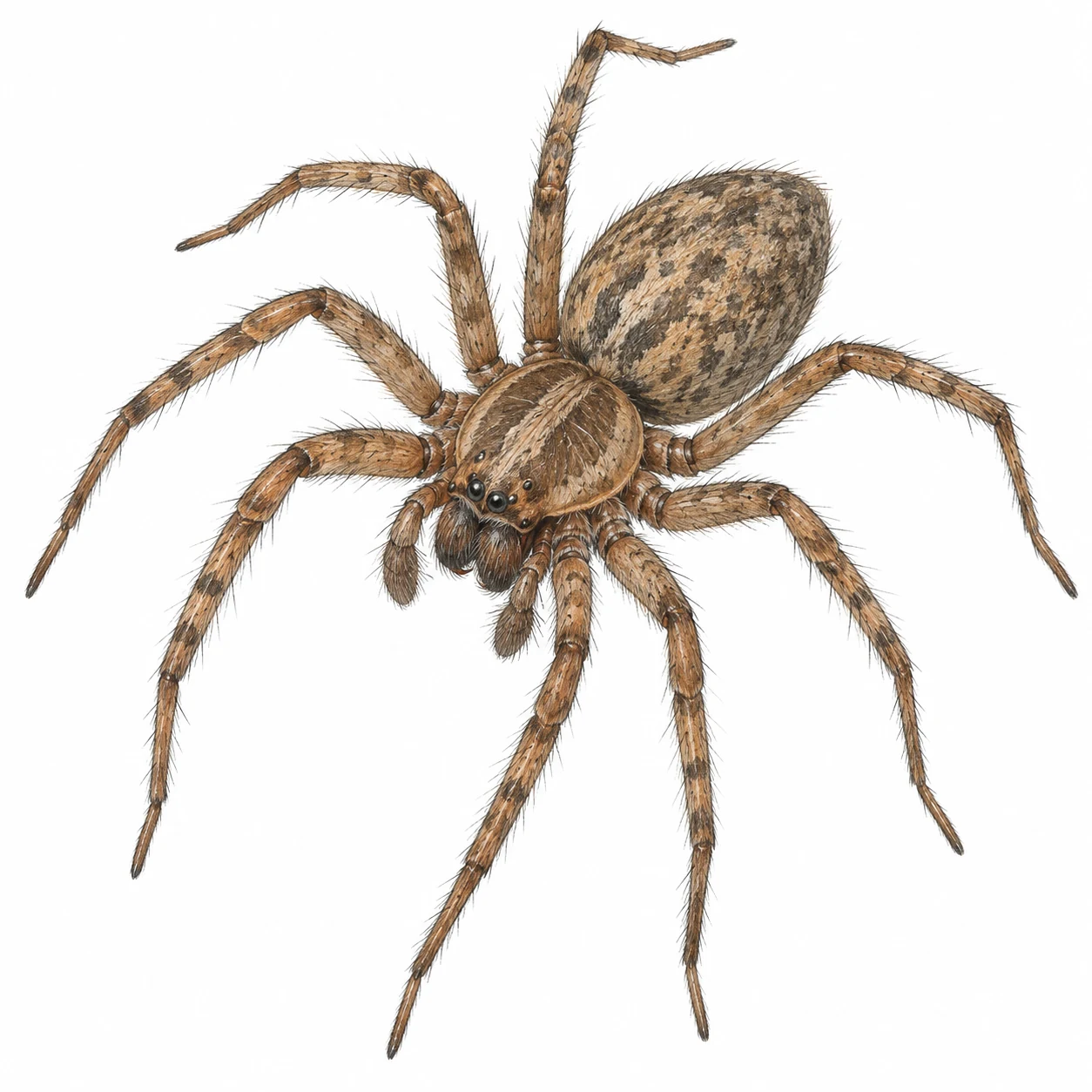
- Eight legs; two main body sections; no antennae or wings.
- Where it is found
- Corners, window surrounds, gaps between belongings and sheltered areas.
- Behaviour
- Some build webs; others roam to hunt.
- Solution type
- Entry prevention and surface treatment suited to the target pest.
WHY IT MATTERS FOR YOUR HEALTH
Most spiders do not pose a serious medical risk to humans, but bites from some species may be medically significant. Do not touch an unidentified spider with bare hands. Seek medical assessment if a suspected bite is accompanied by pronounced or worsening symptoms; do not assume every skin lesion is a spider bite.
Spiders are not insects: they have eight legs and two main body sections. Unlike insects, they have no antennae. Their silhouettes, sizes and web-building behaviour vary between species.
Spiders in a home do not, by themselves, mean it is dirty or dangerously infested. Sheltered spaces and other small creatures to prey on may help them stay indoors.
Why do webs appear?
Web-building species use their webs to catch prey and for shelter. Old webs can remain even when the spider is no longer there.
Do all spiders build webs?
No. Some species roam to catch their prey; the absence of a visible web does not mean there are no spiders.