01
IDENTIFYING SCORPIONS
- How to identify it
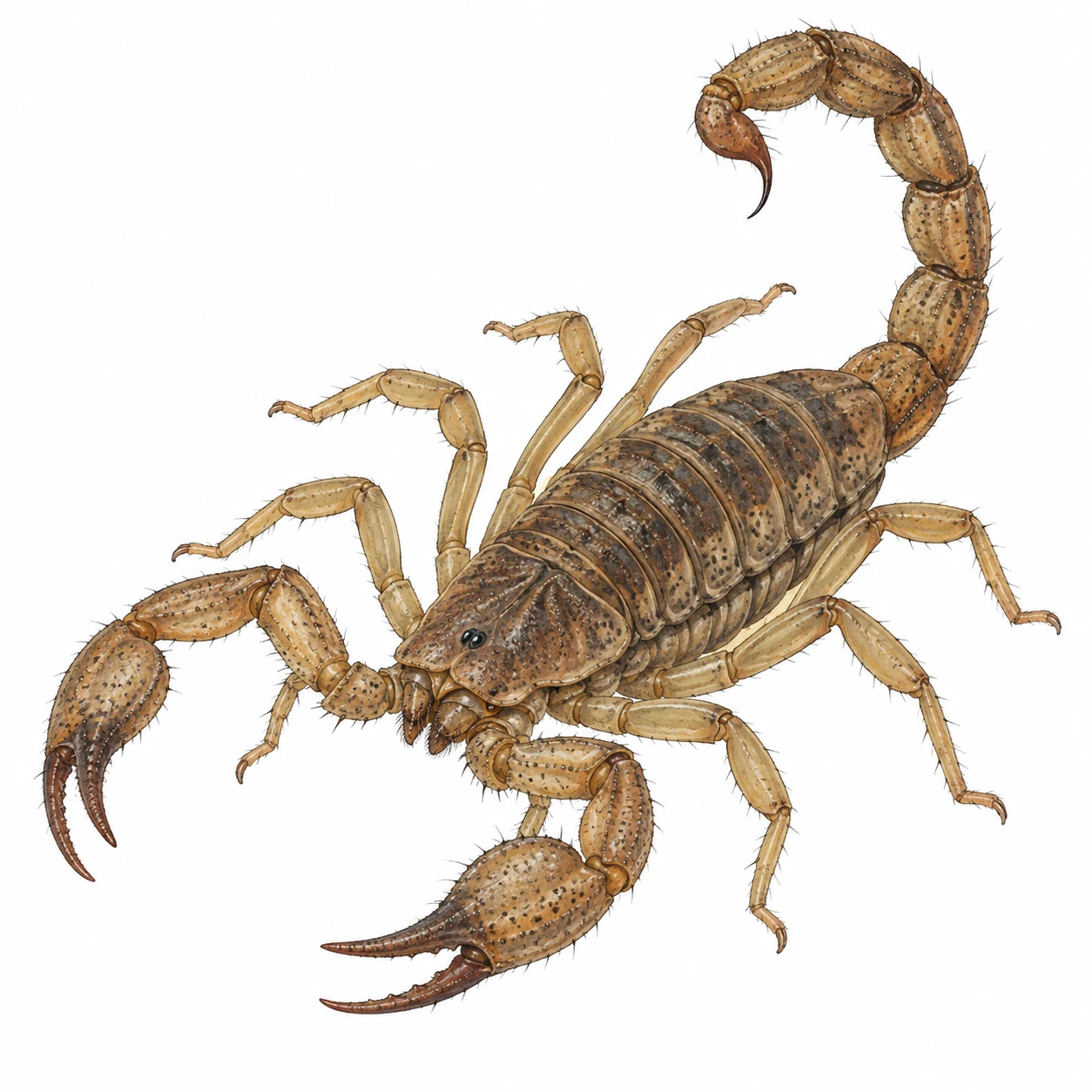
- Eight walking legs, two pincers and a segmented tail with a sting at the tip.
- Where it is found
- Under stones and wood, in cracks, between stored items and around doors.
- Behaviour
- Usually active at night; hides during the day.
- Solution type
- Entry prevention and surface treatment suited to the target pest.
WHY IT MATTERS FOR YOUR HEALTH
A scorpion sting can be medically significant. If stung, seek medical assistance immediately by calling 112. Do not delay medical assessment for children, older people or anyone with severe or widespread symptoms. Do not attempt home treatment; do not apply a pest control product to the person or the affected area.
Scorpions are arachnids, not insects. Their pincers, which are separate from their walking legs, and segmented tails are distinctive features. Do not judge the seriousness of a sting by colour or size alone.
They seek sheltered places where they can find prey. Piles of stones, wood and stored items can provide hiding places; openings close to the ground may make it easier for them to enter buildings.
Does not seeing them during the day mean there is no problem?
No. They are usually active at night and hide during the day. Check entry points and sheltered piles regularly.
What should you do if you see a scorpion at home?
Do not catch it with bare hands; keep children and pets away. Seek professional assistance when needed for safe removal; do not mix chemicals indiscriminately.