MENU

KNOW YOUR PESTS / KNOWLEDGE CENTER

LESSER MEALWORM (LITTER BEETLE)

The lesser mealworm, or litter beetle, is a small, dark beetle called Alphitobius diaperinus. Adults and larvae may live in poultry litter and areas where feed and organic matter accumulate. Cleaning and managing moisture and hiding places are important for control.

Last updated: 7 October 2026

VIEW SOLUTIONS
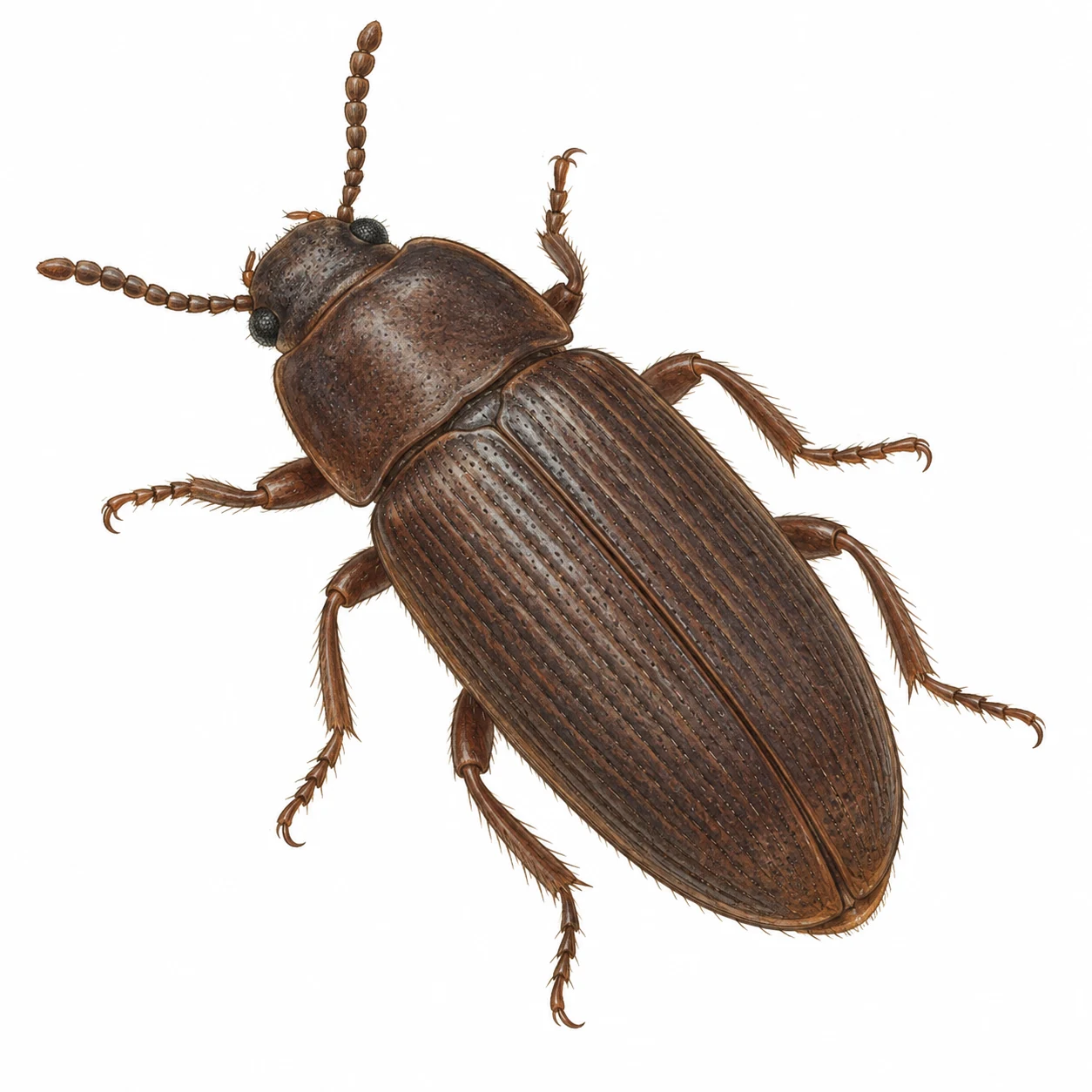
Lesser mealworm (litter beetle): scientific editorial illustration; natural anatomical study
LESSER MEALWORM (LITTER BEETLE)
Stylised anatomical study
01

IDENTIFYING LESSER MEALWORMS (LITTER BEETLES)

How to identify it
Dark brown, oval adult; slender, elongated larva.
Where it is found
Poultry litter, feed and accumulated organic matter.
Behaviour
Adults and larvae may hide in litter.
Solution type
Environmental management and surface treatment only.

WHY IT MATTERS FOR YOUR HEALTH

The lesser mealworm is a pest that needs to be assessed in relation to poultry health and poultry house hygiene. Risks affecting poultry do not mean the same disease will occur in people. Where large numbers are present, farm hygiene and veterinary assessment are important.

Both small, dark adults and elongated larvae may be seen in litter. Organic matter that provides food and moisture can help their numbers grow. Larvae may damage some building and insulation materials.

Why should control go hand in hand with cleaning?

Feed, accumulated organic matter and water leaks can create suitable conditions. Applying a product alone does not remove these sources.

02

HOW TO PROTECT YOURSELF

  1. 01

    Manage litter and accumulated organic matter regularly; reduce spilled feed.

  2. 02

    Reduce excess moisture by repairing leaks in drinkers and pipes.

  3. 03

    Check building joints and areas around insulation; seek professional and veterinary assistance for serious problems.

03

CHOOSE THE RIGHT PRODUCT

  1. 01

    Confirm the target pest

    Check that the product label explicitly lists lesser mealworms (litter beetles) as a target. The general term “pests” does not mean the product is suitable for them.

  2. 02

    Check the application area

    Do not apply Killing products to chickens or other animals. Use only in environments and on surfaces specified on the product label; read the instructions on protecting animals, feed and drinking equipment. Consult a veterinarian about poultry health.

  3. 03

    Read the directions for use on the label

    Compare the directions specific to the target pest and any stated duration of action. Do not apply one product's instructions to another or assume unverified durations.

  4. 04

    Check the authorisation details

    Especially when buying online, check the back label for the biocidal product authorisation number, authorisation date, active ingredient and directions for use.

04

SUITABLE PRODUCTS

Choose a lesser mealworm control solution according to the target and application area.

Compare pest control products across our brands, grouped by solution type. Find the options that suit your needs.

Do not apply Killing products to chickens or other animals. Use only in environments and on surfaces specified on the product label; read the instructions on protecting animals, feed and drinking equipment. Consult a veterinarian about poultry health.

01

SURFACE TREATMENT

Application to surfaces where the target pest is present.

05

FREQUENTLY ASKED QUESTIONS

Where are lesser mealworms found?

Adults and larvae may be found in poultry litter and areas where feed and organic matter accumulate.

Why do lesser mealworm numbers increase?

Organic matter that provides food, spilled feed, moisture and hiding places may help their numbers grow.

How can they damage poultry houses?

Alongside poultry hygiene, the building and its insulation also matter; larvae can damage some insulation materials.

Is Killing Max applied to animals?

No. Killing Max Spray is applied to suitable surfaces specified on the product label, not to animals. Read the instructions concerning animals, feed and drinkers.