MENU

KNOW YOUR PESTS / KNOWLEDGE CENTER

BROWN MARMORATED STINK BUG

The brown marmorated stink bug is a shield-shaped insect that seeks sheltered places in autumn to overwinter. Its presence in homes is usually linked to this seasonal behaviour; the priority is to seal entry points and remove the insect without crushing it.

Last updated: 7 October 2026

VIEW SOLUTIONS
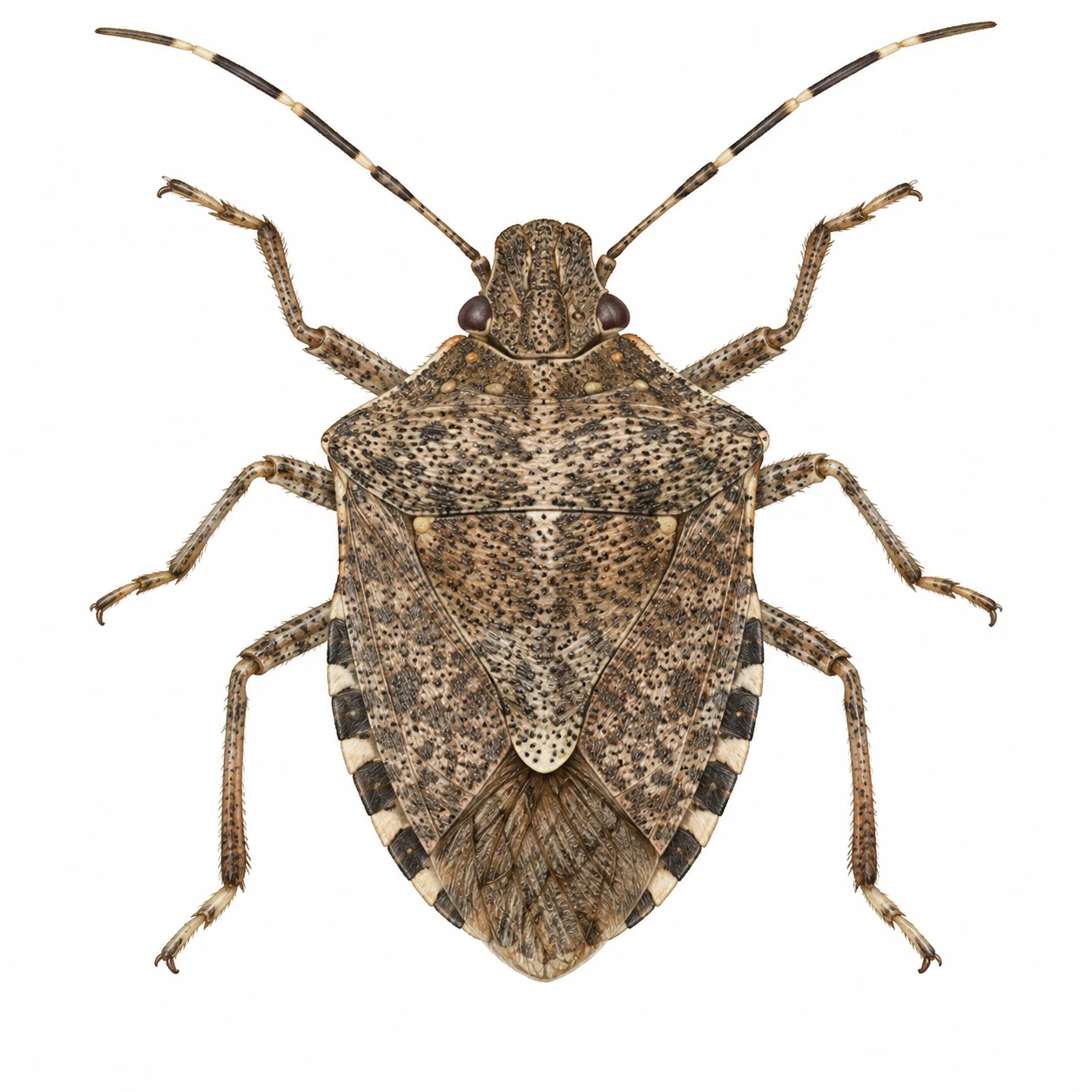
Brown marmorated stink bug: scientific editorial illustration; natural anatomical study
BROWN MARMORATED STINK BUG
Stylised anatomical study
01

IDENTIFYING BROWN MARMORATED STINK BUGS

How to identify it
Shield-shaped brown body; pale bands on the antennae.
Where it is found
Around windows and doors, in wall voids and sheltered structures.
Behaviour
Seeks overwintering sites in autumn; may release an odour when disturbed.
Solution type
Surface treatment suited to the target pest.

WHY IT MATTERS FOR YOUR HEALTH

The brown marmorated stink bug is not known to transmit disease to people and is not a species that bites people or pets. The main problems in homes are nuisance and unpleasant odour. Its ability to damage crops is not the same as a risk to human health.

Halyomorpha halys is a mottled brown agricultural pest approximately 1.5 cm long. Pale bands on its antennae and alternating colours along the sides of its body help with identification. As similar insects exist, do not identify the species definitively by colour alone.

As the weather cools, it may enter buildings through gaps around doors and windows and in exterior walls. Individuals overwintering indoors generally do not reproduce; seeing large numbers does not mean they are breeding inside.

Why does it smell unpleasant when crushed?

It may release a defensive secretion when disturbed. As crushing it can intensify the odour, opt for physical removal.

Why is it seen particularly in autumn?

Cooler weather triggers its search for a sheltered overwintering site. It is helpful to check entry points before the season begins.

02

HOW TO PROTECT YOURSELF

  1. 01

    Reduce gaps under doors and around windows; repair insect screens.

  2. 02

    Check pipe openings and cracks in exterior walls.

  3. 03

    Physically remove the insect without crushing it. If using a vacuum cleaner, bear in mind that the odour may linger in the appliance.

  4. 04

    If large numbers repeatedly enter, assess the building's entry points; seek professional assistance if needed.

03

CHOOSE THE RIGHT PRODUCT

  1. 01

    Confirm the target pest

    Check that the product label explicitly lists brown marmorated stink bugs as a target. The general term “pests” does not mean the product is suitable for them.

  2. 02

    Check the application area

    For this target pest, use only the surfaces specified on the label. Do not treat people, animals, food or textiles that come into direct contact with skin as application areas.

  3. 03

    Read the directions for use on the label

    Compare the directions specific to the target pest and any stated duration of action. Do not apply one product's instructions to another or assume unverified durations.

  4. 04

    Check the authorisation details

    Especially when buying online, check the back label for the biocidal product authorisation number, authorisation date, active ingredient and directions for use.

04

SUITABLE PRODUCTS

Choose a brown marmorated stink bug control solution according to the target and application area.

Compare pest control products across our brands, grouped by solution type. Find the options that suit your needs.

01

SURFACE TREATMENT

Application to surfaces where the target pest is present.

05

FREQUENTLY ASKED QUESTIONS

Do brown marmorated stink bugs breed indoors?

Brown marmorated stink bugs entering homes to overwinter generally do not breed indoors. Seeing more than one individual does not, on its own, indicate indoor breeding.

Do brown marmorated stink bugs bite people?

They do not bite people or pets. The main indoor problems are nuisance and the odour they release in defence.

Why do stink bugs enter homes?

They may enter through gaps around doors and windows and in exterior walls, particularly in autumn, as they search for sheltered overwintering sites.

Which product is suitable for brown marmorated stink bugs?

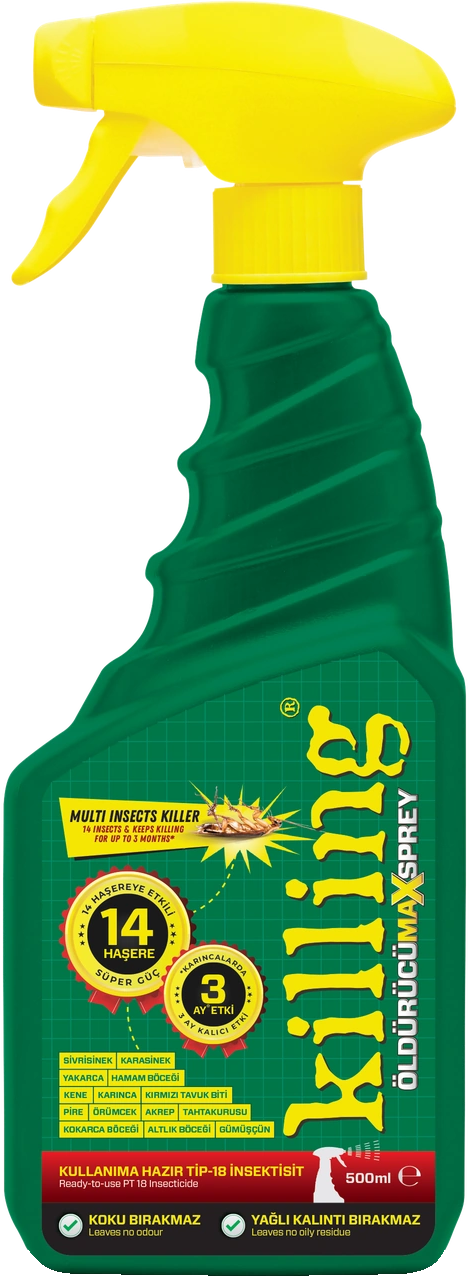
Killing Max Spray is shown for this target. Apply only to surfaces specified on the label, following the target-specific instructions; do not transfer durations stated for other pests to this target.